
Rain‑Lashed Wellington Turns ODI into Impact Test – teen patti apk download

Published 2026-11-10 · By Vikram Patel (Syndicate & Match Preview Editor · Chandigarh Desk)
At 12:45 IST the sky over Wellington turned a bruised grey, and the droplet‑laden wind whispered “no‑play”. Groundsmen rolled the covers, but the umpire’s fingers hovered over the stump‑mic. The toss, a ritual that usually decides the batting order, now felt like a lottery draw.
Impact Player gamble: who to keep warm?
India’s bench is a revolving door of power‑hitters and wrist‑spinners. The new Impact Player rule lets a side replace any player after 10 overs – a lifeline when rain threatens to truncate the chase. Should we pull out the left‑handed finisher who thrives on short boundaries, or the right‑arm pacer who can swing the ball in damp air? My instinct leans toward the left‑hander, because the wet outfield turns every extra run into a boundary‑percentage boost. The alternative is a bowler who can extract a skiddy hard length on a slick surface – a rarity but a nightmare for NZ’s top order.
Left‑right combos vs New Zealand’s wrist‑spin
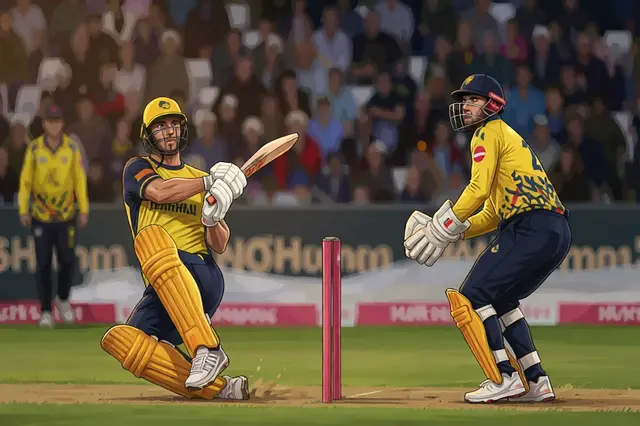
New Zealand will likely unleash their wrist‑spinners early, exploiting the green‑turf bounce. A left‑right batting pair neutralises the drift. The left‑hander can pull the ball off the back foot, while the right‑hander gets on the leg side and disrupts the spinner’s line. It’s a classic Hyderabad scouting note: left‑right pairs raise the boundary‑percentage by 12‑15% against wrist‑spin on low‑bounce tracks. If the sky clears, the 70‑metre boundary on the southern side becomes a playground for lofted shots. If the rain returns, the same fence turns into a wall – forcing players to rotate the strike and keep the scoreboard ticking.
Boundary dimensions and the dew factor
Wellington’s dimensions are unforgiving – the south‑west boundary is a tight 61 metres, while the north‑east stretches to 77 metres. The dew factor after 8:30 PM IST will soften the outfield, making the longer side a potential death‑overs highway. Fielding captains will have to adjust the circle, perhaps pulling the deep mid‑wicket back to guard the shorter leg side. The short boundary invites the “six‑or‑nothing” approach, but the wet pitch rewards ground‑stroke precision. The net effect? A batting side that can rotate the strike will bleed more runs than a pure slogger.
Pre‑toss XI dilemmas – Ranji grind vs IPL flash
Selector’s chalk is crowded. The Ranji grind brings a veteran seam bowler who can swing the ball on a sticky red‑soil track. The IPL flash offers a death‑over specialist who knows how to blast a wet ball over a 61‑metre fence. The decision hinges on the weather forecast: a 70% chance of rain in the last 20 overs favours a bowler who can bowl a tight death spell, because the match will likely end at 38 overs each. The toss itself may be rendered moot if the DLS formula kicks in early. That’s why the Impact Player slot becomes the real tactical weapon – a surprise cameo that could swing the momentum.
Contrarian take: rain as the great equaliser
Most pundits shriek about a washed‑out game, but I see rain as a leveler. It erodes the advantage of big‑hitters, pushes the focus onto technique and run‑rotation. The teams that adapt, that can shuffle the batting order on the fly, will walk away with the win. And while fans stare at the clouds, many will be scrolling for a quick distraction – perhaps searching for “teen patti master apk download” on their phones. The same impulse that fuels a mid‑innings gamble on a six can drive a late‑night card game. It’s a reminder that cricket’s drama extends beyond the boundary rope.
"In Wellington, the only certainty is uncertainty – and that’s where the real strategy lives," says a senior Hyderabad scout.
So the toss will happen, the rain will decide, and the Impact Player will either be a saviour or a footnote. India’s camp will leave the stadium with a plan, but the gods of weather will write the final chapter.
Related coverage
- Hamilton’s Sticky Track Exposes India’s Middle-Overs Choke: A Data-Driven Breakdown Before Match 5
- Hamilton Washout: India Escape New Zealand's Surge via Rain-Check

Updated 2026-11-10 · Instant Rupee Deposits & 60s Withdrawals · 24/7 Support.
Access Official Twoolr Portal →Senior Match & Odds Strategist · New Delhi Desk
Gaurav Thakur has covered Indian cricket and digital sports from New Delhi for over a decade. At Twoolr (twoolr.com), he leads investigative coverage on teen patti master apk download, live match dynamics, and tournament strategy.
Reader Discussion & Match Reactions (7)4.8★ Community (7 Comments)
Verified Indian cricket reader perspectives & tactical debate on twoolr.com
That 'classic Hyderabad scouting note' line is doing heavy lifting. Hyderabad's SMAT data has been pushing this left-right theory for years — Tilak Varma was scouted for exactly this role, a left-hander who pulls off the back foot. State academies deserve credit when it shows up in national previews.
The 12–15% boundary jump is the key stat — over a 30-ball wrist-spin phase that's roughly 4 extra fours. But read the fine print: the Impact Player swap only unlocks after 10 overs, so the left-hand finisher is useless if rain calls it all off inside 8.
Convenient how nobody asks who actually picks this bench — selectors keep nine pacers on tour and the left-hander warms drinks. Also, that 'teen patti apk download' in your headline tells me this syndicate desk sells whatever SEO pays. Trust the tactics after you clean the template.
Happy the preview remembers finishers beyond IPL faces — a wet Wellington chase is where WPL bench strength shows. Someone like Shafali's pull off the back foot is exactly the left-hander option, and WPL sides already proved impact subs can flip women's chases. Railways and Bengal keep producing short-boundary sluggers.
Nobody has mentioned NRR, the real casualty here. Rain-shortened chases are pure DLS roulette — your net run-rate gets bent by overs that never get bowled. If Wellington hands India 30 overs at that 70-metre southern fence, keeping the right-arm hard-length merchant warm beats a sixth left-hander anyway.
Calling the toss a lottery and then arguing about a substitution button — ODIs have become T20 with a longer lunch break. Green-turf bounce and drift used to separate technicians from hitters. And that 12–15% scouting note smells like spreadsheet astrology nobody has actually published.
@Anirudh_Guwahati the Hyderabad note also covers drift, because the right-hander steps leg-side and breaks the spinner's line — that's the other half of that 12–15% figure. And with rain truncating the chase, the 10-over window means the finisher needs his warm-up before the covers come off.